FREE eBook
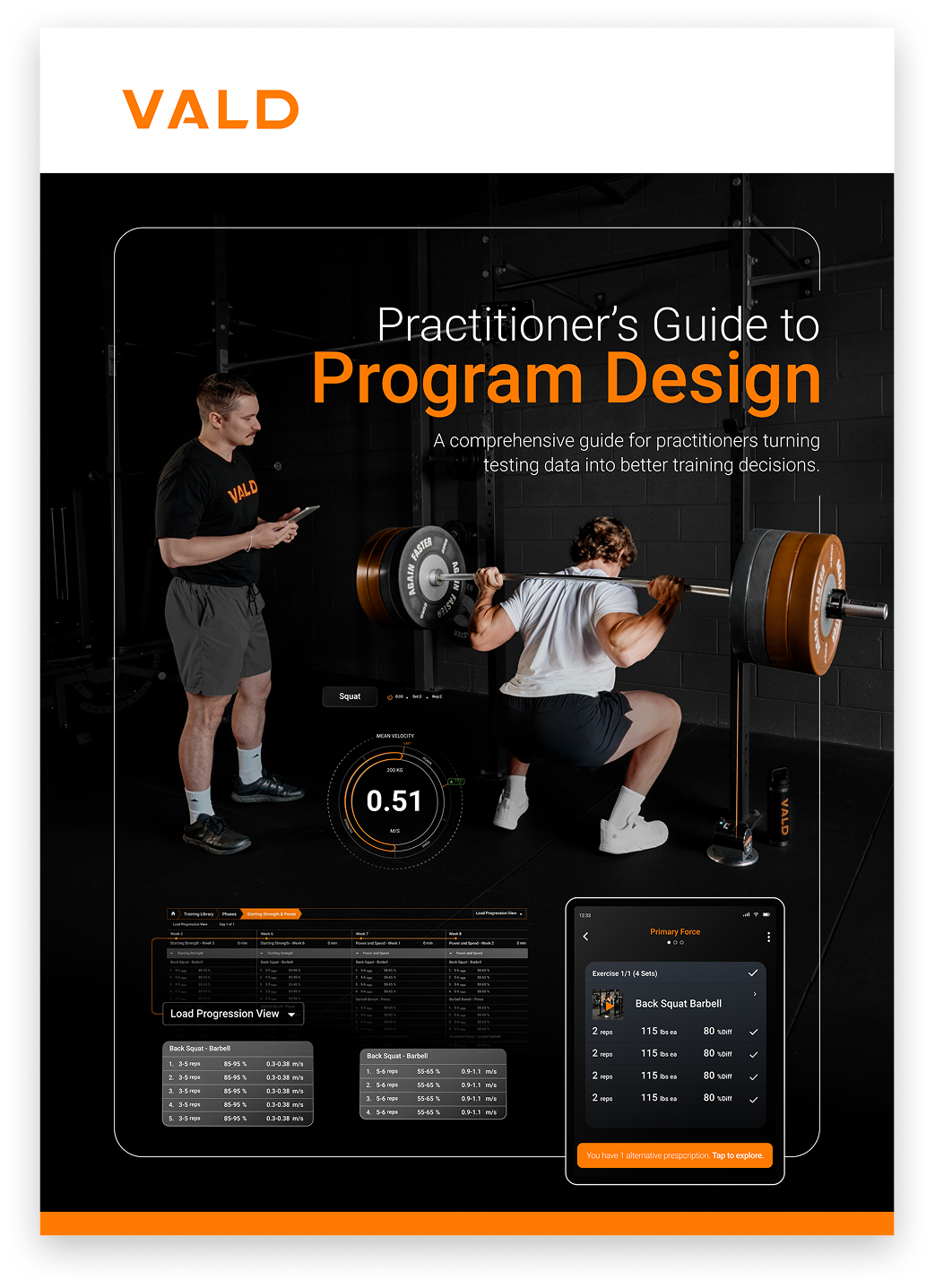
Practitioner’s Guide
to Program Design
A comprehensive guide for practitioners turning testing data into better training decisions.


Good programming is built on good feedback.
Program design is well established in principle, but humans are complex, and adaptation rarely follows a linear path. Similar programs can produce very different outcomes, leaving many decisions about exercise selection, progression and modification based on perception rather than evidence.
The Practitioner's Guide to Program Design is a framework for identifying the physical qualities that matter, measuring them reliably and using objective feedback to guide progression. It covers adaptation, feedback loops, technology-informed periodization and session structure, with case studies from elite and developing environments.
Some questions we'll answer
in this guide:
- Q: Which physical qualities should be prioritized for each athlete?
- Q: How do I know if a program is producing the intended adaptation?
- Q: How can objective testing be integrated into a session without disrupting it?
- Q: How should data inform periodization and progression decisions?
... and much, much more.
By combining data from objective testing and training technology with traditional strength programming, coaches and practitioners can create targeted strategies that align with each athlete – bridging the gap between research and practice.
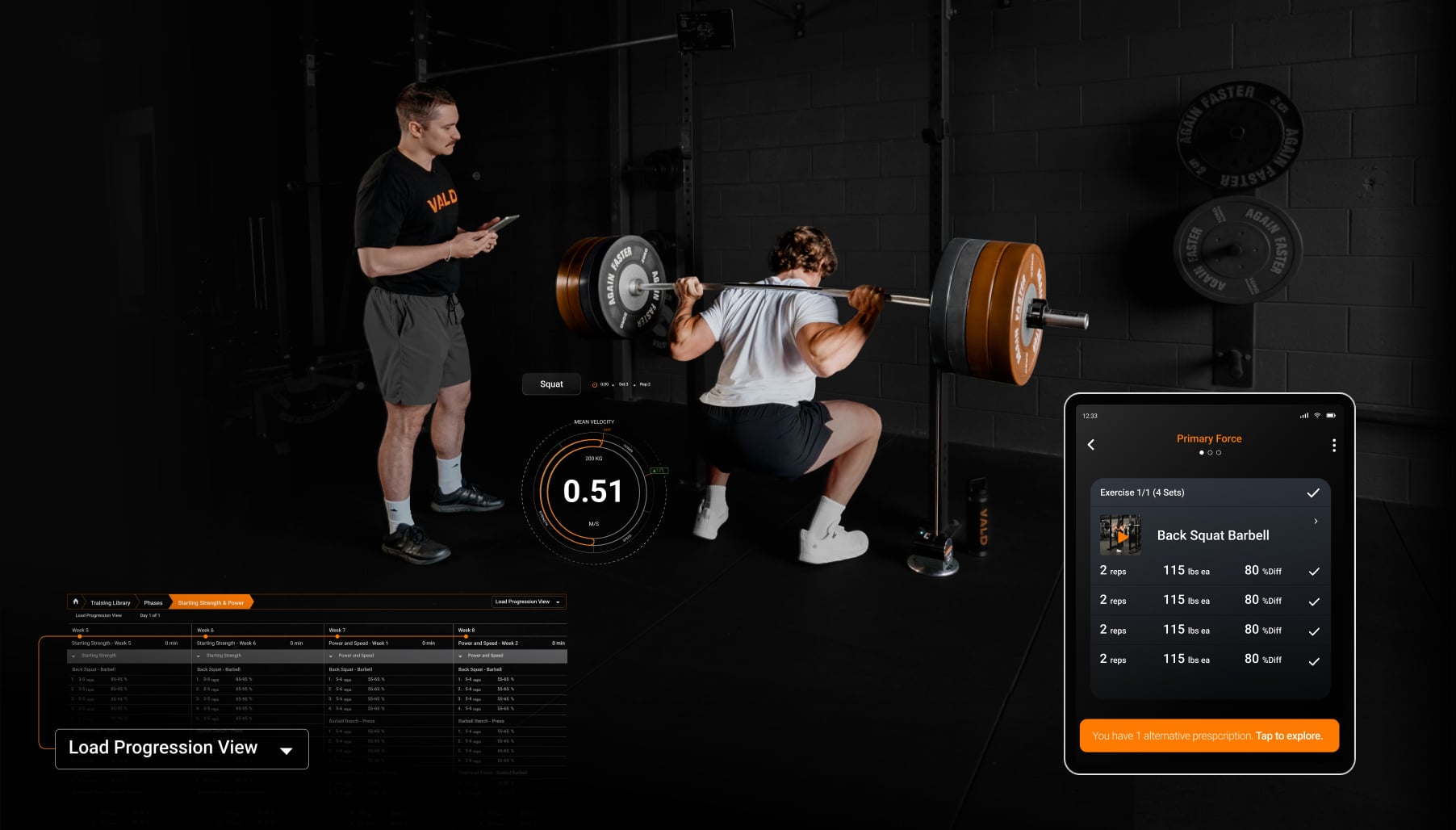
We use technologies like force plates, dynamometers, GPS systems and velocity-based training tools to give students objective information to work with, but collecting data is not the same as using data.
[Integrating VALD technology] has become a tool for testing, analysis, education and sales, all in one, and a key component of our gym.
ForceDecks, ForceFrame and NordBord give me objective data that takes the guesswork out of coaching, allowing me to assess, monitor and program with a level of precision that simply isn’t possible otherwise.
The numbers show where technique breaks, where weaknesses emerge and how much room there is for development. If that data is easy to get, store and recall, we can change the program while it still matters, not at the end of a block when it is too late.
Copyright VALD. All rights reserved. | Privacy Policy